
Residential Duct Inspections, Leakage Testing, Design, Cleaning, Sealing & Replacement.
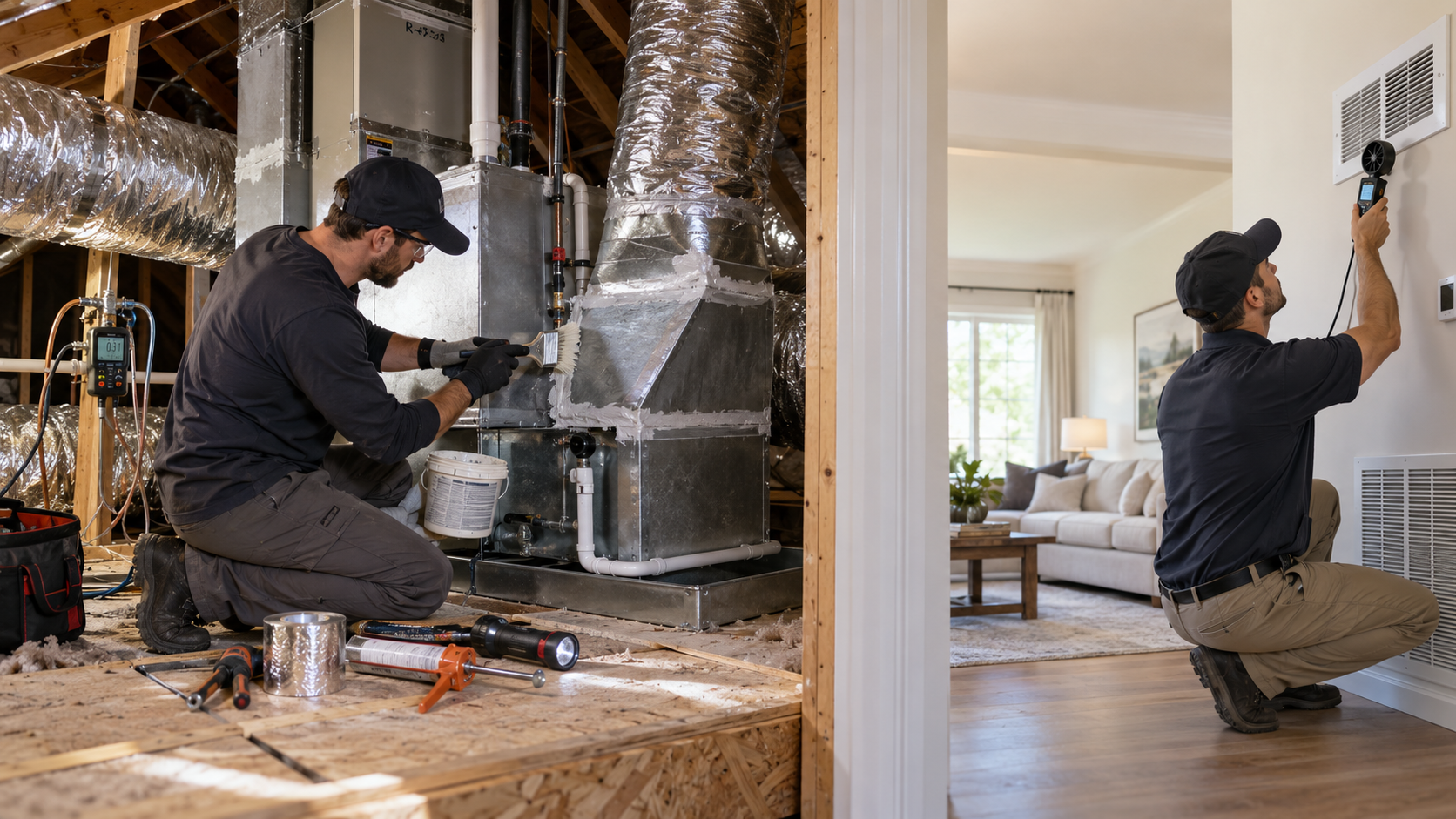
500 cfm in 500 cfm out
Duct System
Optimization
Duct optimization focuses on how the air-distribution system interacts with the HVAC equipment, the building enclosure, and the pressure relationships within the home. A duct system that is poorly configured, imbalanced, or excessively leaky can affect comfort, humidity control, indoor air quality, energy use, and equipment performance.
From a building-science perspective, supply and return airflow influence pressure throughout the home. Those pressure differences can drive unwanted air movement through attics, crawl spaces, wall cavities, and other parts of the building enclosure, carrying heat, moisture, dust, and contaminants with it. Proper duct performance helps the HVAC system deliver conditioned air where it is needed while maintaining more stable pressure relationships and better overall control of the indoor environment.
Duct Leakage Testing
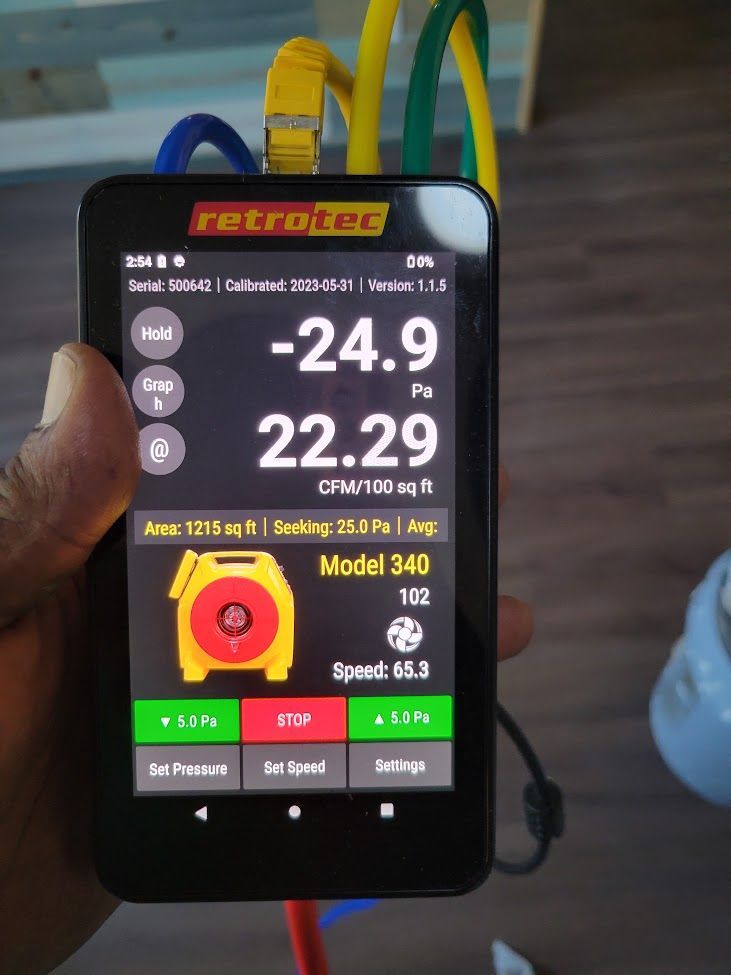
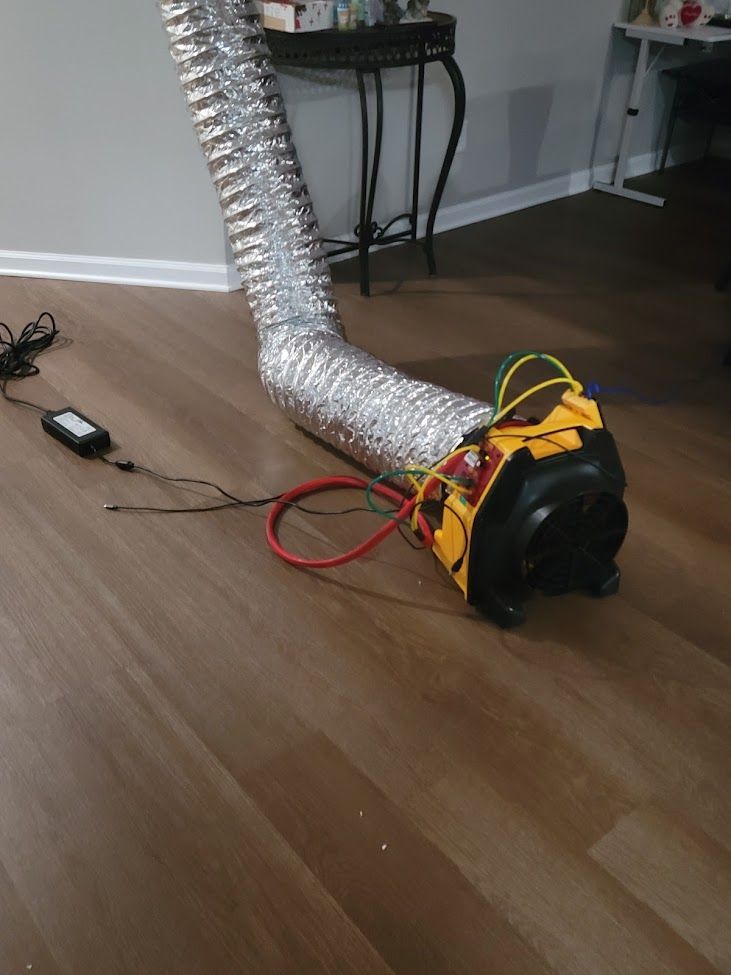
Duct leakage testing measures how much air is escaping from or being drawn into the HVAC duct system through unintended openings. Leakage can occur at joints, seams, plenums, boots, equipment connections, and concealed duct sections, reducing the amount of conditioned air that reaches the living space.
Excessive duct leakage can affect airflow, comfort, humidity control, energy use, filtration, and HVAC performance. It can also create pressure differences that pull air from attics, crawl spaces, wall cavities, and other unconditioned areas, introducing heat, moisture, dust, odors, and airborne contaminants into the system.
By measuring leakage under controlled pressure, duct leakage testing provides a measurable baseline of duct-system tightness and helps determine whether air is being delivered and returned through the intended pathways rather than lost through the building.
Services
The Ductwork Is Your Home's Circulatory System
The duct system is the circulation pathway of the HVAC system. Air supplied to the home must have an adequate pathway back to the return side of the system. When that circulation is disrupted by duct leakage or supply-and-return imbalance, the HVAC system can change pressure conditions throughout the home.
Supply leakage outside the conditioned space can place the home under negative pressure, drawing outdoor air and air from attics, crawl spaces, wall cavities, and other uncontrolled areas into the building. Return leakage can create the opposite effect, placing the home under positive pressure and forcing conditioned air outward through openings in the building enclosure.
These pressure differences can drive heat, humidity, moisture, dust, odors, and contaminants through areas of the home where they were never intended to travel. Over time, uncontrolled air movement can contribute to comfort problems, increased energy use, condensation, moisture-related building damage, indoor-air-quality concerns, and interaction with combustion appliances.
A properly functioning duct system does more than deliver air it maintains a controlled circulation path between the supply and return sides of the HVAC system without using the building itself as part of that pathway.
Duct Testing, Duct Cleaning & Duct System Optimization
Once the duct system has been evaluated, the next step is determining the appropriate corrective approach. Depending on the condition of the system, this may include cleaning, sealing, airflow correction, system optimization, repair, or replacement.
TruResults Home Services bases those recommendations on the actual condition and performance of the ductwork so the work addresses the problem identified rather than applying the same solution to every system.
The duct system has a major effect on how well the HVAC system performs throughout the home. If the ductwork is leaking, restricted, damaged, poorly connected, or out of balance, the system may struggle to move the amount of air it was designed to deliver.
This can lead to weak airflow, rooms that are difficult to heat or cool, higher system pressure, energy loss, and unwanted air being pulled from attics, crawlspaces, or other areas of the home.
Evaluation may include:
- Duct inspection
- Duct leakage testing
- Supply and return airflow testing
- Static pressure testing
- Airflow and balancing checks
- Identification of restrictions, leakage, and poor connections
The purpose is to find out what the duct system is actually doing and determine what changes may help the HVAC system perform better.
Duct Cleaning & Air Distribution Care
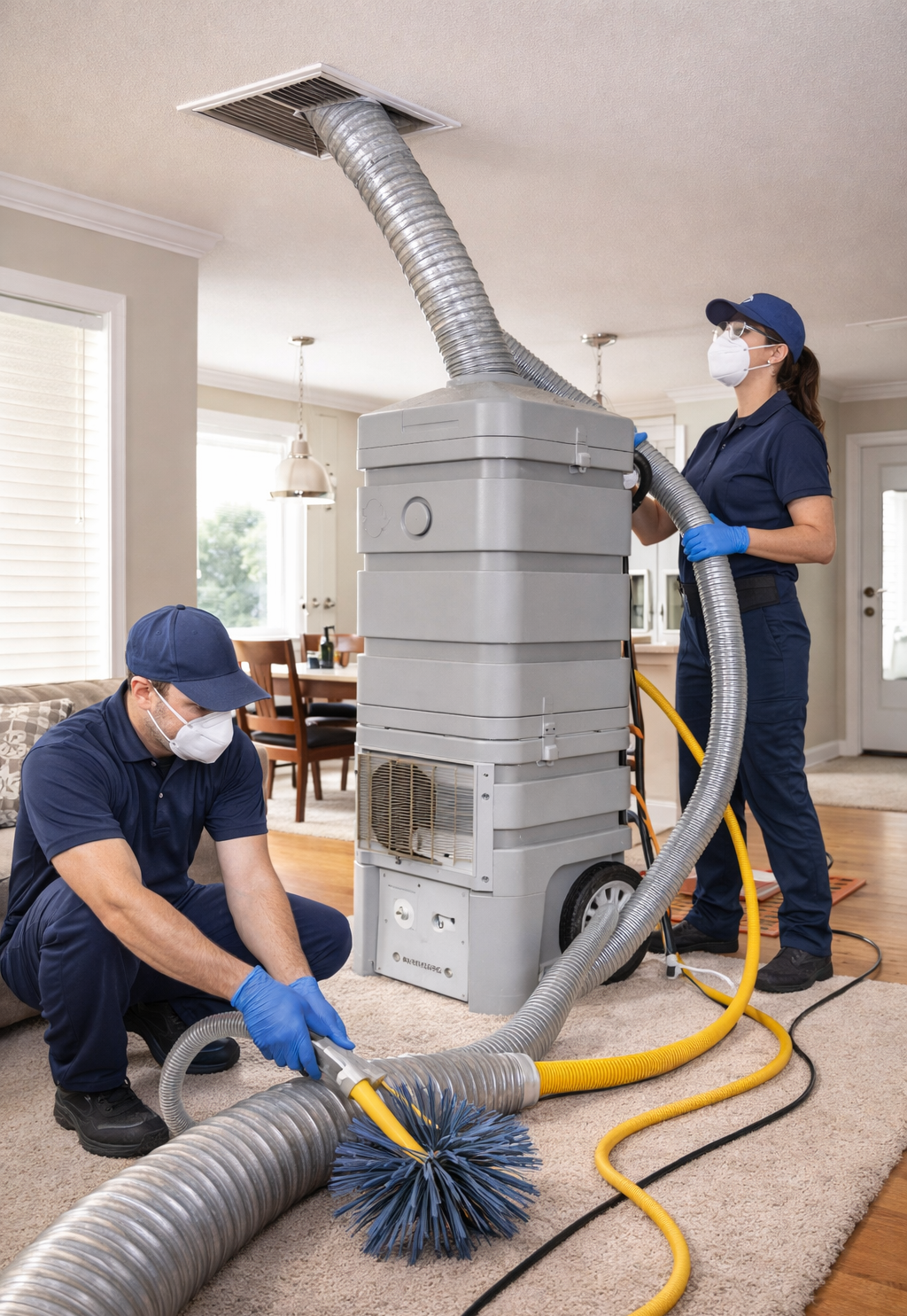
Duct cleaning begins with an inspection of the system to determine the material, condition, accessibility, and appropriate cleaning method. Older flexible ductwork and concealed duct systems may become brittle, damaged, compressed, or difficult to access over time, so cleaning methods are selected carefully to avoid creating damage that cannot be readily seen or repaired.
Depending on the system, cleaning may include:
- Supply and return register cleaning
- Removal of accessible dust and debris
- Vacuuming of return boxes and accessible duct surfaces
- Cleaning around boots, grilles, and air-distribution openings
- Sealing accessible gaps and connections where appropriate
- Post-cleaning inspection of accessible components
When the condition of the ductwork makes conventional cleaning questionable, a different approach may be recommended, including targeted cleaning, sealing, repair, renovation, or replacement.
The goal is not simply to clean the ducts, but to improve the cleanliness and condition of the air-distribution system without causing unnecessary damage.
Duct Renovations & Modifications
Duct systems may require modification or renovation when leakage, restrictions, damaged materials, poor transitions, or distribution problems are limiting HVAC performance.
Work may include:
- Modifying or rerouting ductwork
- Replacing damaged or restricted sections
- Improving supply and return pathways
- Correcting restrictive transitions and connections
- Sealing duct leakage
- Improving insulation where needed
- Balancing airflow and distribution
Duct changes are evaluated in relation to the home’s heating and cooling needs, required airflow, and how air is being delivered to and returned from each room. Load and duct-design calculations may be incorporated as part of the evaluation.
After renovation work is completed, airflow, static pressure, leakage, and system operation may be rechecked to verify performance.
Duct Sealing & Performance Testing
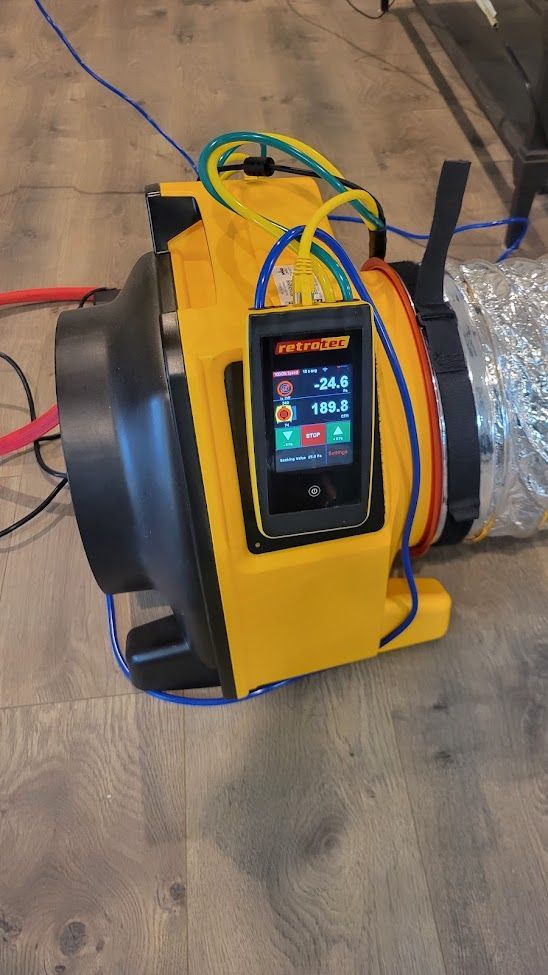
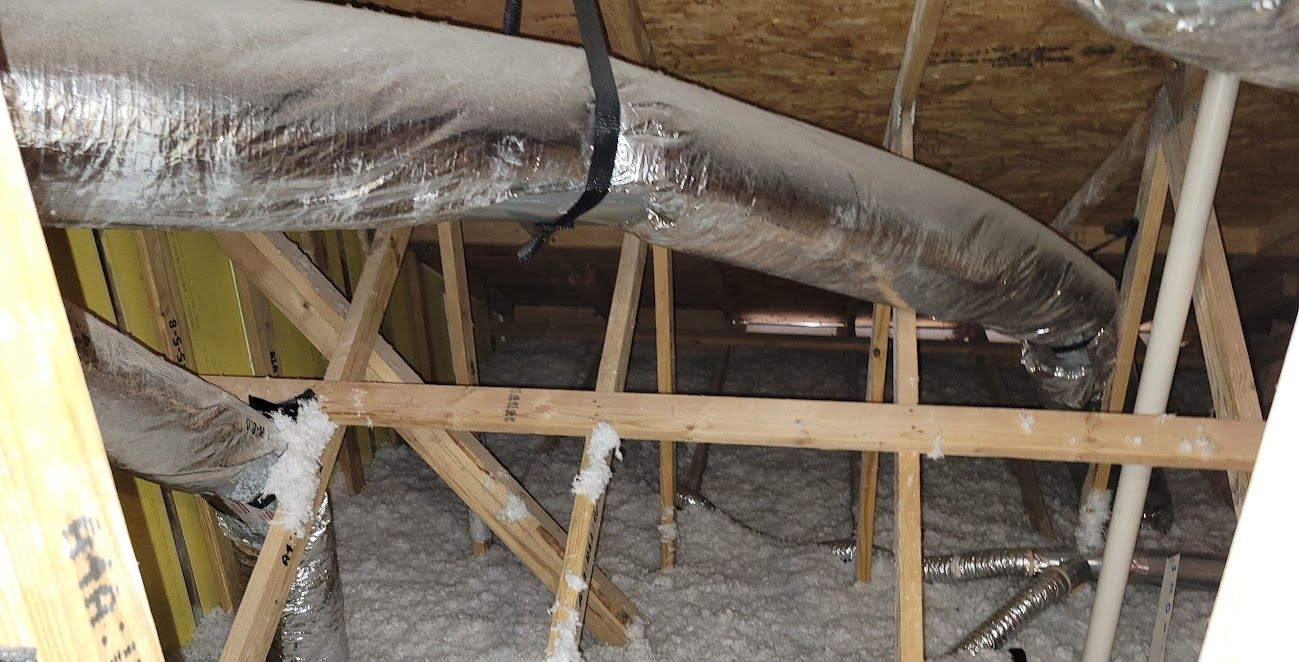
Duct sealing is guided by measured duct leakage, airflow, and system pressure. A duct leakage test is used to establish baseline leakage, identify problem areas, track sealing progress, and confirm that the system is meeting the intended performance target.
The duct system is also evaluated for airflow, static pressure, cleanliness, condition, and installation deficiencies. Corrective work may include sealing, cleaning, repair, modification, or replacement.
Verification may include:
- Pre- and post-sealing duct leakage measurements
- Supply and return airflow measurements
- Total external static pressure evaluation
- Room-to-room pressure or balance checks
- Confirmation of leakage reduction
- Verification of improved airflow distribution
- Final system performance review after corrective work
The objective is to document measurable improvement in duct tightness, airflow, pressure balance, and overall system performance.aph
Airflow Diagnosis & Optimization
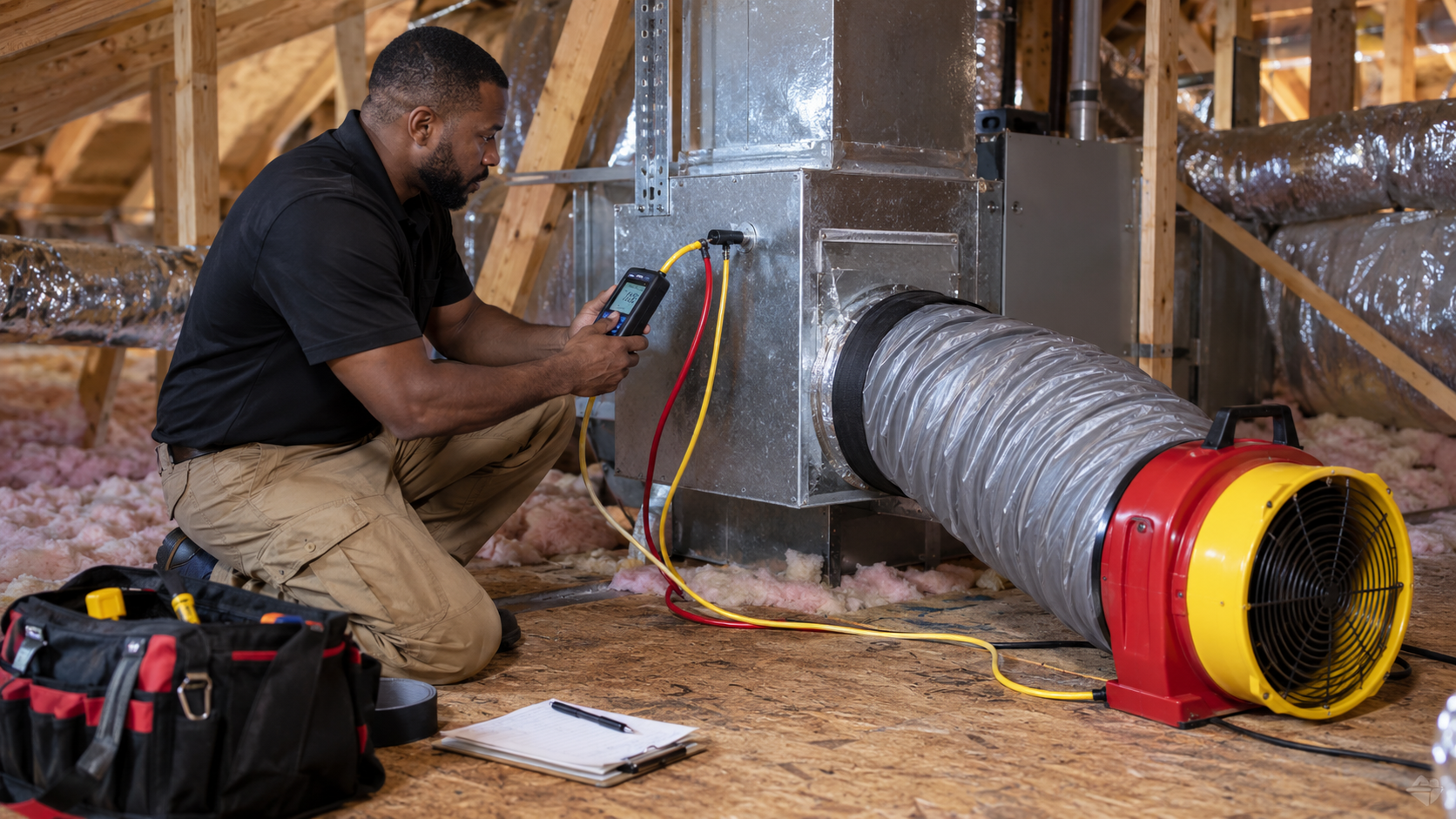
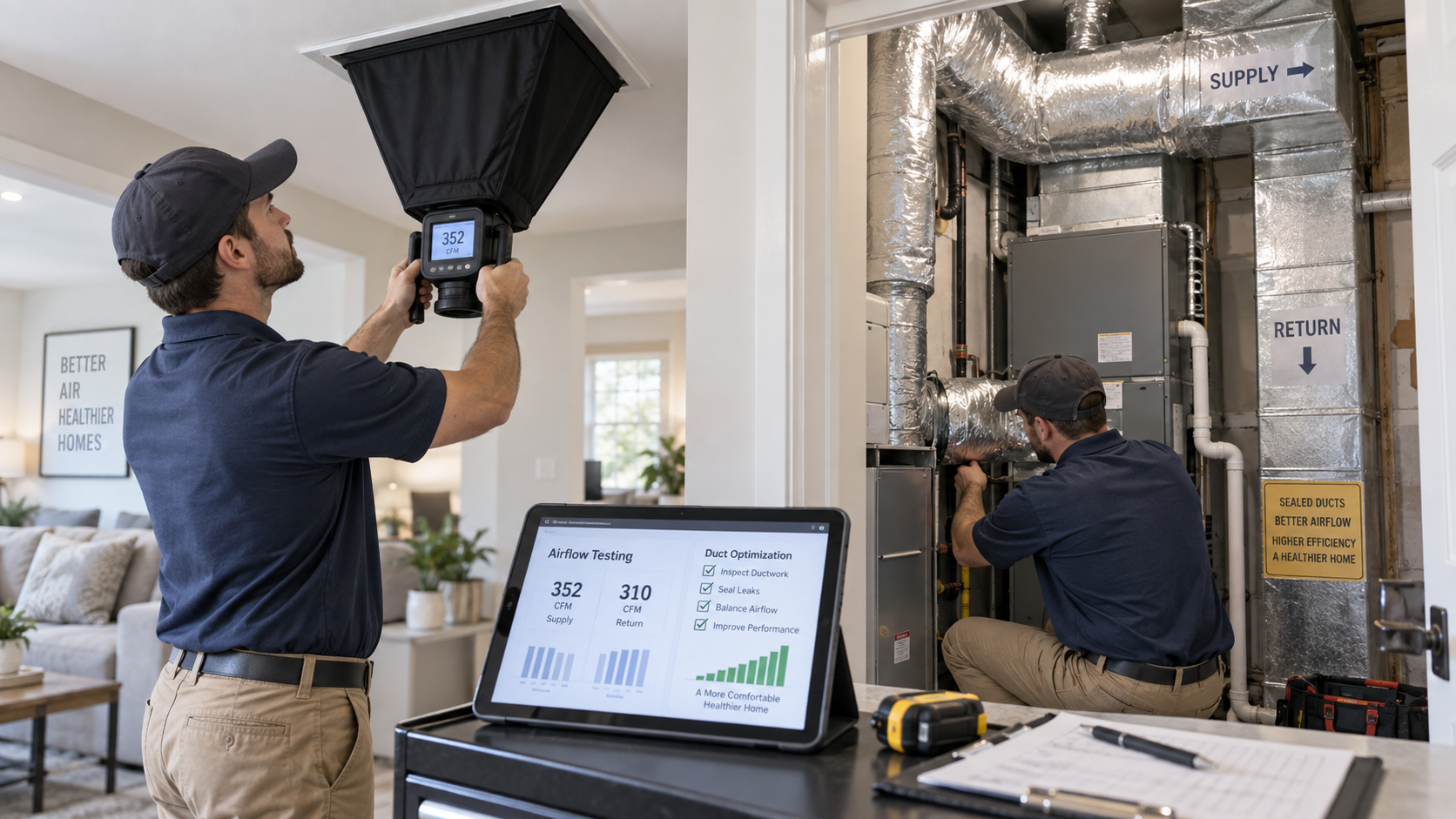
Comfort problems are often caused by airflow and duct-system performance, not the HVAC equipment itself. Our Airflow Diagnosis & Optimization service measures how much air the system is moving, how much is reaching each room, and where restrictions or pressure problems may be limiting performance.
Using professional airflow and pressure-testing equipment, we can evaluate:
- Total system airflow
- Supply and return airflow
- Room-by-room airflow and balancing
- Static pressure and system resistance
- Return-air restrictions and duct deficiencies
- Block and room load requirements when needed
Measurements are used to identify under-supplied or over-supplied rooms, restrictive ductwork, poor transitions, return-air limitations, and balancing concerns.
The result is a clear path for balancing, duct modifications, sealing, return-air improvements, or other corrections needed to improve comfort and system performance.
Your Comfort is Our Priority